The biblical hope is not escape. The biblical hope is resurrection.
Scripture does not teach man to comfort himself with fantasies of native indestructibility. Scripture teaches him to reckon with death as death. It teaches him to reckon with the grave as the place to which the body returns and in which the dead wait upon the command of God. It teaches him to place his hope not in a supposedly self-sustaining human principle, but in a future divine act.
That distinction governs the whole matter. If man possesses conscious heavenly glory by nature at the instant of death, resurrection recedes from necessity into ornament. If man sleeps in death until the appearing of Christ, resurrection remains what the apostles preached it to be: the great public victory of God over death, the vindication of Christ’s work in history, and the hour in which the dead are raised to life or brought forth to judgment.
The language of Scripture is not coy on this point. The dead know nothing. In the grave there is no work, no device, no knowledge, and no wisdom. Lazarus did not furnish Christ with an occasion to preach immediate celestial relocation. Christ said that Lazarus slept. Daniel did not describe the dead as presently enthroned in realized reward. He described those who sleep in the dust as awaiting an awakening yet to come. Paul did not console the Thessalonians by saying that the dead had already entered their final inheritance. He consoled them by saying that the Lord Himself will descend, the trumpet will sound, and the dead in Christ will rise first. Scripture places the believer’s comfort at the coming of the King, not at the supposed natural flight of the soul.
The doctrine of immediate heavenly ascent changes more than a timetable. It changes anthropology. Genesis says man became a living soul: “Then God the Eternal moulded man from the dust of the ground, breathing into his nostrils the breath of life; this was how man became a living being.” (Moffatt) It does not say God inserted an independently immortal tenant into a temporary shell. Ecclesiastes says the dust returns to the earth and the spirit returns to God who gave it. Scripture does not there describe a conscious redeemed personality taking up residence in glory. It describes the reversal of creation. Dust returns to dust. Breath returns to God. Life ceases. Man awaits the One who made him.
That is why the Bible speaks with such force about immortality as gift rather than possession. God alone has immortality. Eternal life is the gift of God in Christ Jesus our Lord. That language means what it says. A gift is not an innate human property. A gift is not a metaphysical entitlement secretly carried by every man into the grave. A gift is bestowed. It is conferred. It is granted by God in His order and at His appointed hour.
The great injury done by the popular heaven-at-death formula is therefore not merely exegetical. It is pastoral and doctrinal at once. It weakens the gravity of death by refusing to call death “death.” It weakens the force of resurrection by treating resurrection as an appendix to a bliss already possessed. It weakens judgment by moving the decisive scene from the public appearing of Christ to a hidden private transition at the bedside. It also flatters human vanity, because it tells man that he carries indestructibility in himself instead of telling him that he depends wholly upon the Lord who raises the dead.
The apostles preached something harder and better. They preached Christ crucified, Christ risen, Christ returning, and the dead raised by His voice. They did not offer a misty continuation of consciousness as the church’s great banner. They offered the resurrection of the dead. They offered the redemption of the body. They offered the triumph of the last Adam over the last enemy.
The rival doctrine gained strength because it was emotionally easy and doctrinally convenient. It gave men a way to keep religious sentiment while evacuating the scandalous concreteness of biblical hope. Resurrection is public, historical, bodily, and magnificent in its grandeur. Immediate heaven is easier merchandise. It domesticates death. It sentimentalizes judgment. It turns the Christian promise into a soft-focus tale fit for greeting cards, funeral pamphlets, and religious speech that wishes to comfort without first submitting the Word.
Yet Scripture continues to resist the substitution. It continues to insist that the grave matters. It continues to insist that the trumpet matters. It continues to insist that the hour is coming when all who are in the dead in Christ will hear His voice and come forth. That is the architecture of Christian hope.
At this point the customary objections are raised, and they should be raised. A serious case must survive contact with the four passages most often invoked against it: Luke 23:43, Philippians 1:23, 2 Corinthians 5:8, and Revelation 6:9–11. These texts are real. They are not to be dodged. But neither are they allowed to perform theological labor far beyond what they actually say.
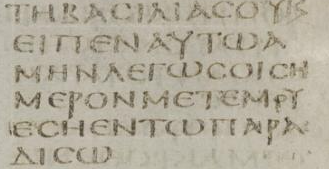
Luke 23:43 is the sharpest text on first reading because most English translations punctuate the sentence in the now familiar way: “I tell you truly,” said Jesus, “you will be with me in paradise this very day.” (Moffatt) But the punctuation is not original. The comma that decides the argument in English is an editorial decision added centuries after the inspired text was written. That does not automatically prove the minority reading, but it does destroy the illusion that the modern punctuation descended from heaven with the verse itself. Once that illusion is removed, the statement can be heard as a solemn assurance given that day under those dreadful conditions: “I tell you truly this very day, you will be in paradise with me.” The thief’s own request is future-oriented. He asks to be remembered when Christ comes into His kingdom. He does not ask for a same-day transfer. Christ’s answer, on that reading, does not ratify the modern fantasy of immediate final glory. It ratifies the certainty of future inclusion.
Nor does the wider witness permit a lazy handling of the verse. On resurrection morning Jesus says, “I have not ascended yet to the Father.” That statement does not settle every lexical question about paradise, but it does forbid the effortless popular move by which Luke 23:43 is made to prove, all by itself, the fully developed modern picture. The verse is difficult. It is not decisive. It certainly does not license the dogmatic swagger with which it is so often deployed against the rest of Scripture.
Philippians 1:23 is next: “My strong desire is to depart and be with Christ, for that is far the best.” (Moffatt) That is glorious language. It is not, however, a chronological map of the intermediate state. Paul there states the blessedness of his destination, not the mechanism by which every interval is to be parsed. The same apostle is explicit elsewhere that the dead in Christ rise at the coming of the Lord, that the trumpet sounds, that the dead are raised incorruptible, and that mortality puts on immortality then. Those are his formal resurrection texts. They are not to be overruled by a compressed personal statement of longing. Philippians 1 says that death cannot rob the believer of Christ. It does not say that Paul intended to teach a complete doctrine of conscious heavenly life before the resurrection.
There is a further simplicity here that many controversies manage to obscure. For the one who dies, no experienced interval need stand between death and the presence of Christ. The next conscious moment after death would be Christ. That existential truth is perfectly compatible with the public resurrection still occurring at the last day. Paul’s sentence need not be made to bear more than it bears. Its object is confidence, not speculative anatomy.
The same discipline applies to 2 Corinthians 5:8. Torn from context, “fain would I get away from the body and reside with the Lord” (Moffatt) is made to sound like a complete victory parade for the doctrine of disembodied blessedness. But Paul’s own argument in the passage cuts the other way. He expressly says that he does not wish to be unclothed, but clothed upon, that mortality might be swallowed up by life. His desire is not for naked disembodiment as such. His desire is for transformed embodiment. The governing image is not ghostly continuation. It is swallowed mortality. It is life overcoming death. It is, in substance, resurrection.
That observation matters because it exposes how cheaply the text is often handled. The very passage enlisted to defend disembodied heaven explicitly says Paul does not prefer the unclothed condition. He prefers the divine clothing that overcomes mortality. Verse 8 therefore cannot honestly be used as a proof that disembodiment is the believer’s great consummation. At most, it states the confidence that nothing separates the believer from the Lord and that the end of the pilgrimage is home with Him. It does not erase Paul’s repeated insistence that the dead are raised at the trumpet and clothed with immortality then.
Revelation 6:9–11 is the weakest of the four as a proof of the popular doctrine, though it is often quoted with the greatest confidence. John sees the souls of those who were slain under the altar crying out for vindication. But Revelation is a book of vision, symbol, heavenly drama, beasts, bowls, lamps, horns, dragons, and signs. To seize one scene from that apocalyptic theater and force it into service as straightforward prose instruction on the metaphysics of the dead is not fidelity. It is genre blindness masquerading as certainty.
O Sovereign Lord, holy and true, how long wilt thou refrain from charging and avenging our blood upon those who dwell on the earth?” -Revelation 6:10
Moffatt
The altar itself tells against the crude reading. The imagery is sacrificial. The blood of sacrifice is poured out at the altar. Abel’s blood cries from the ground. The martyrs beneath the altar are a vision of covenant witness demanding vindication before God. The scene signifies that their cause is alive before heaven and that divine judgment has not forgotten them. It does not require the conclusion that John has paused the apocalypse in order to give the reader a technical lecture on conscious intermediate existence.
Indeed, Revelation itself later distinguishes the sight of souls from their coming to life. That sequence alone should make the proof-texter hesitate. But hesitation is exactly what the popular doctrine resists. It prefers the quick appropriation, the emotional shortcut, the inherited phrase that saves men from having to submit every beloved assumption to the larger grammar of Scripture.
And that is the heart of the matter. The doctrine of immediate heavenly ascent survives not because it is textually dominant, but because it is culturally dominant. It persists because it is easier to repeat than to examine. It survives because it gives preachers and mourners a language of instant consolation that feels warm in the mouth. But warmth is not the measure of truth. Repetition is not the measure of truth. Antiquated sentiment dressed in pious tone does not become apostolic by long use.
The biblical record remains sterner and more magnificent than the substitute. The dead sleep. The dead know nothing. The soul that sins shall die. Dust returns to dust. Breath returns to God who gave it. The dead in Christ rise first at His coming. The trumpet sounds. Mortality is swallowed up by life. The graves are opened. The righteous are raised to life. The wicked are raised to judgment. That is the scriptural order. It is not thin. It is not deficient. It is not in need of philosophical padding or funeral-home embellishment.
The church should therefore speak plainly. The dead are dead. The dead in Christ are not lost. They sleep in safety under the custody of God. Their hope is not a naturally immortal faculty smuggling itself past death into immediate glory. Their hope is Christ. Their hope is His return. Their hope is the resurrection of the body. Their hope is the public overthrow of the grave by the One who entered it and broke it.
The modern tale says that man does not truly wait. Scripture says that he does. The modern tale says that the decisive victory is privately realized at the hour of expiration. Scripture says that the decisive victory is manifested when the Son of God speaks and those in the graves come forth. The modern tale softens the cemetery into a corridor. Scripture leaves it a tomb until Christ opens it.
That is the line that must be recovered. Not because it is novel, but because it is older than the drift. Not because it is severe for severity’s sake, but because truth has claims of its own. Not because resurrection needs embellishment, but because resurrection is greatest promise ever made.